
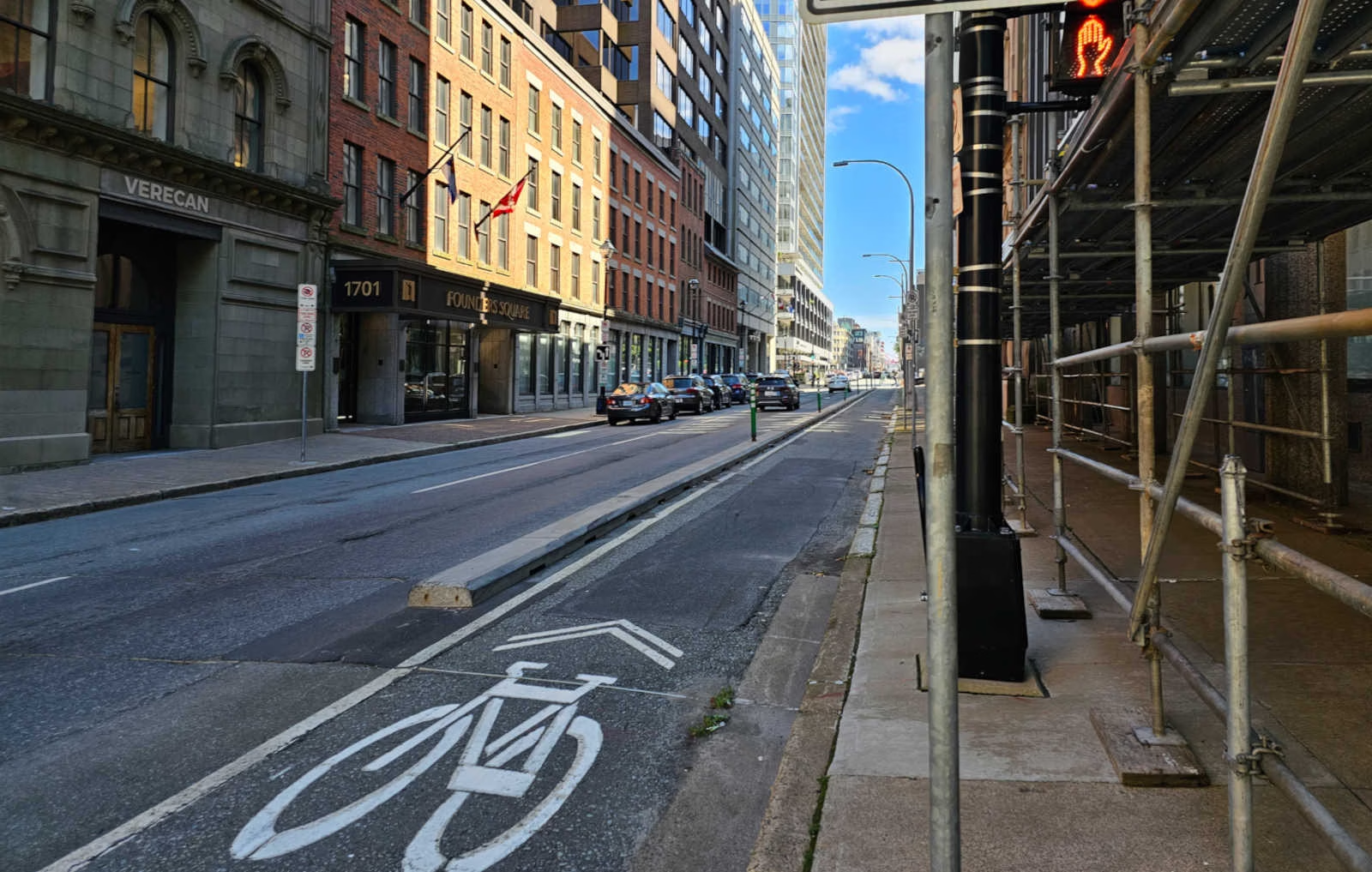
Bike lanes have been the subject of much debate in Halifax–especially when it comes to the cost.
Due to budget pressures, the future of the city’s AAA bikeway network (all ages and abilities) is under debate. As a result, locals are speaking up. In a poll on Halifax outlet, The Coast, readers were asked about alternatives to the proposed 57-km network of protected bike lanes, multi-use pathways, and local street bike lanes designed for all ages and abilities.
Parts of the network are complete. Some are under construction, and others remain in planning stages. Originally set for completion by 2030, the project now faces possible cuts aimed at avoiding a potential 10 percent property tax increase, according to Mayor Andy Fillmore. Such changes could reduce safety by eliminating barriers that separate cyclists from traffic. Fillmore hasn’t exactly been a champion of bike lanes. In fact, quite the opposite. He has the ignominious honour of being the first Halifax mayor to miss the annual eponymous Mayor’s Ride.
The results from the poll reveal a divided public, to say the least. The largest group, 42.4 percent say they do not ride a bike but support finding alternatives to the full AAA network.
Non-cyclists who opposed changes made up 26.3 percent. Among riders, most disapproved of alternatives (18.2 percent), while only 13.1 percent of cyclists supported them. Overall, 55.5 percent of respondents favoured alternatives, leaving 44.5 percent against.
Cyclists voiced concerns about safety and accessibility. “Safety comes first,” one reader said to The Coast. “The AAA bike lanes encourage alternatives to the car and improve health,” another said. Non-cyclists in favour of alternatives focused on budget constraints. One reader even said. that bike lane barriers are “want rather than need.” Any cyclist knows that paint is hardly infrastructure, and the safest way to ride is with separated bike lanes. Full stop.
Some riders suggested creative solutions, like off-street multi-use trails or reallocating street space to maintain protection while reducing costs.
The poll underscores a clear tension: those who rely on the city’s bike infrastructure prioritize safety and accessibility. The non-cyclists simply focus on reducing costs.
It’s a debate that readers of Canadian Cycling Magazine continue to face. Whether it’s major cities like Vancouver, Montreal or Toronto, or smaller places like Medicine Hat. There is a sharp divide between…
Click Here to Read the Full Original Article at Canadian Cycling Magazine…