

It’s been almost 30 years since Shimano introduced its original SPD cleats. In that time, the SM-SH51 cleat has quietly become a standard, ridden by millions across trail networks, city streets and cyclocross courses around the globe. The design was reliable, simple and practically untouchable. So when Shimano recently dropped its first major update to the system, the CL-MT001, some riders were understandably skeptical.
That included long-time tester and journalist Terry McKall, who admitted, “I was a bit wary when Shimano announced it was changing its SPD platform after 30 years.”
Still, McKall was quick to add, “this isn’t just change for the sake of ‘newness.’ There are tangible benefits that are immediately easy to feel.”
Multi-entry cleats: a small change with big benefits
The headline feature of the CL-MT001 is multi-directional entry. Unlike the classic SH51, which required a toe-first approach to engage, the new cleats let you clip in from a range of directions: heel-first, back-to-front or even a straight-down stomp.
That functionality matters. As Shimano points out, it helps: trail and enduro riders get back on the gas after a foot-dab in techy terrain, cyclocross and gravel racers remount and engage faster and beginner riders clip in with less fumbling and more confidence.
McKall explains the upgrade clearly.
“If you unclip while riding, instead of having to lift your foot and do the toe-stab to get clipped in, you can just keep your foot on the pedal and it will find its way home with surprising consistency. That’s huge in those scary moments where you need to get clipped in again now.”
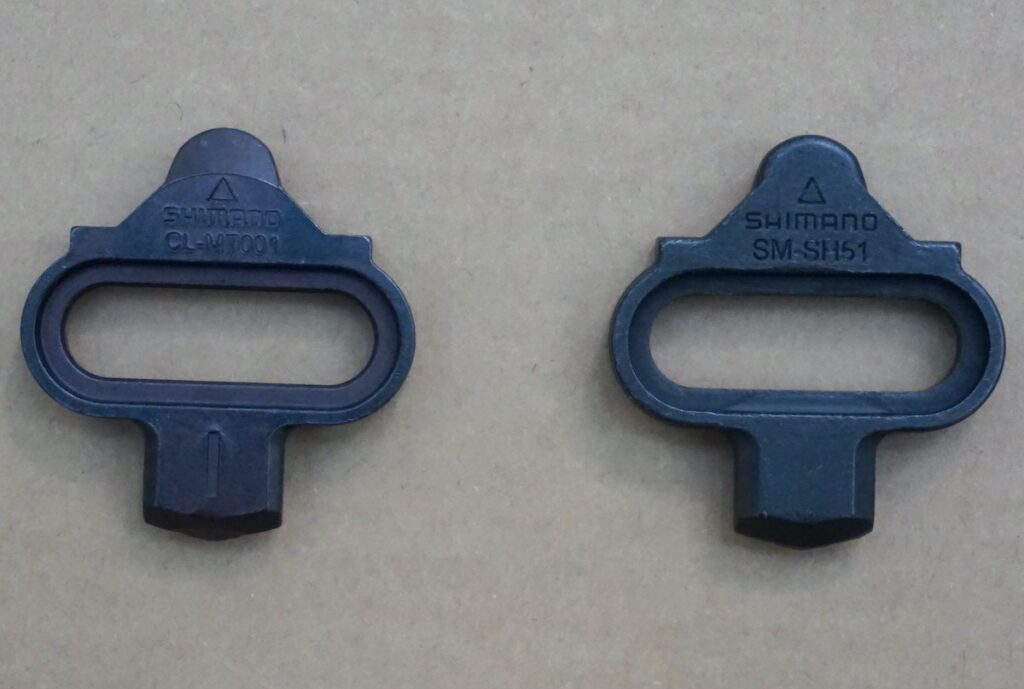
New on the left. Old on the right. Not that different, but different.
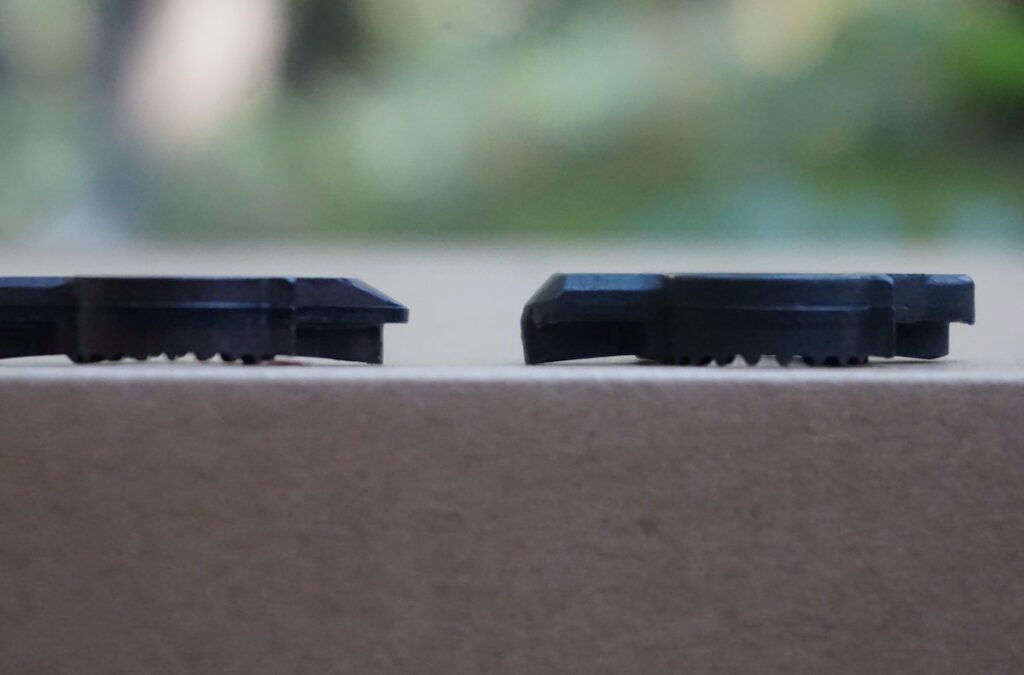
The leading edge, with that pointed angle, is the biggest difference. The new one (left, still) is also a bit shorter.
Same SPD feel, less material at the toe
One thing Shimano didn’t mess with?
“Shimano manages this without losing the solid ‘clack’ feel and sound of clipping out,” said McKall.
But to create the wider engagement range, Shimano had to shave material from the toe and heel ends of the cleat. McKall notes this may affect durability:
“The downside could be the change in shape could lead to faster wear and a shorter lifespan. There’s just physically less material at the toe end and, to a lesser extent, at the heel.”
It’s not a dealbreaker. Just something riders may want to keep an eye on with…
Click Here to Read the Full Original Article at Canadian Cycling Magazine…