

Shimano has, for a long time, been known to take the tech and design that makes its high performance groups stand out and bring those functions to more price conscious groups. But, with the release of Deore XT Di2 hot on the heels of the new XTR Di2 (M9200) series, that “trickle down” happened faster than ever before. Riders had to wait nearly a year for the last mechanical XT after the release of M9100 XTR. With Di2, it was just a couple weeks.
We’ve spent months on both groups at this point. The better part of a year on XTR Di2 and four months on XT Di2. There are differences between the two: XTR gets a flashier finish and some extra titanium bits. But the performance is so close that, once again, the second-tier XT group could be the one to the door to Shimano’s new world of wireless shifting for a much wider range of riders.
We’ll break down the differences in construction and performance to show whether XT or XTR Di2 is the right move for you.
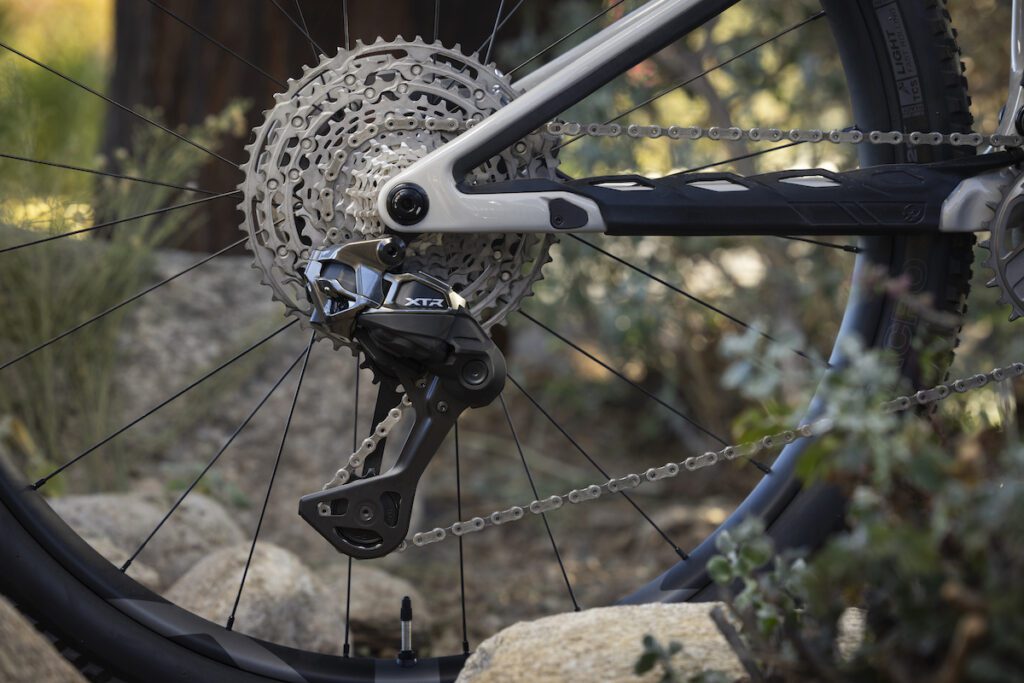
XTR with 10-51. Photo: Sterling Lorence
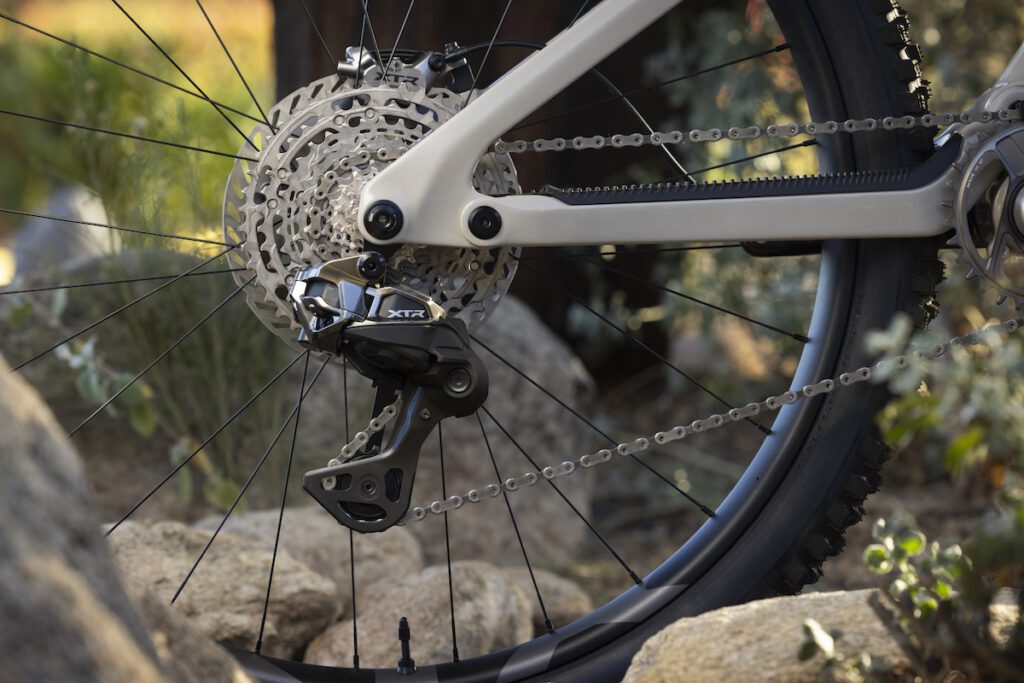
XTR with 9-45. Photo: Sterling Lorence
Cassette: Deore XT 8200 vs XTR 9200
The release of Di2 arrived with a mix of major and minor changes to Shimano’s cassette options. For the 10-51 wide-range cassette, those changes are subtle. The compact group, though, introduces a brand new 9-tooth cog for a new 9-45 cassette. That brings the compact group to a 500 per cent gearing range, even closer to the 510 per cent of the 10-51 wide-range group. This option exists in both groups, of course, and with similar differences in construction and price. Both, though, use Shimano’s Microspline freehub standard.
XTR sets itself apart here by bringing in a suite of titanium gears to the cassette. Five Ti gears on the 9-45 and Four on the 10-51. Five steel gears are joined by two aluminium gears on the 9-45 and three on the 10-51 cassette. For Deore XT, there is just a single aluminium cog on the compact cassette and two, the largest, on the 10-51.
The liberal use of titanium for XTR cuts weight compared to the steel teeth that make up the bulk of the Deore XT cassette, without sacrificing much in the way of durability. It is a hair shy of 100g difference between the top-end and second-tier cassettes (369g /327g for XTR and 463g/426g for Deore XT). They also add significantly to the cost. XT is $261 while XTR jumps significantly up to $675.
That’s a lot of cash for XTR, especially for a wear item that…
Click Here to Read the Full Original Article at Canadian Cycling Magazine…