
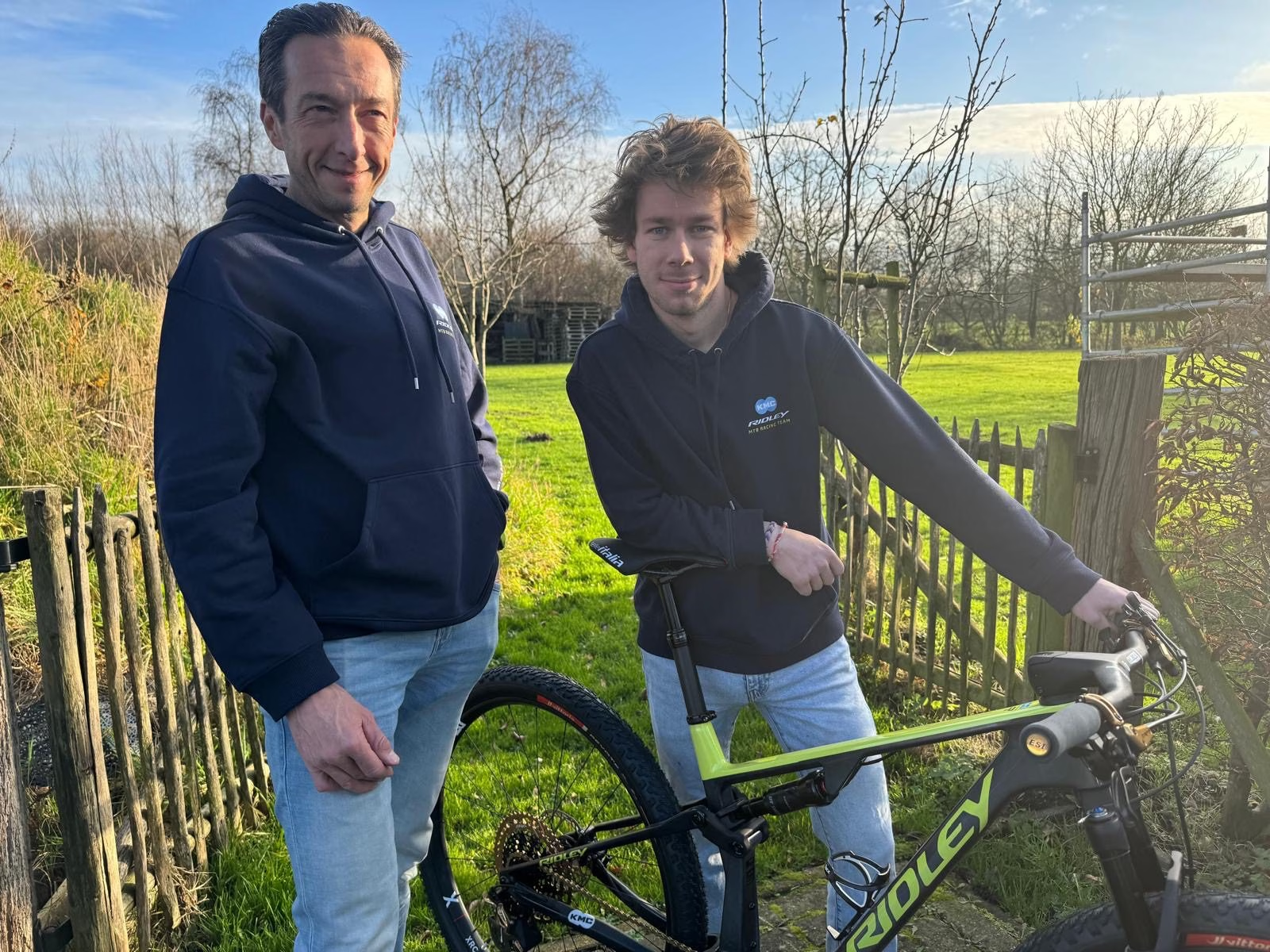
Two months ago, Tyler Orschel was staring down the possibility that his best season might also be his last at the World Cup level.
He had just finished 12th at Mont-Sainte-Anne, a result he pointed out was the best Canadian elite men’s finish there since Geoff Kabush in 2014. He went viral riding wheel-to-wheel with Nino Schurter at Lenzerheide. He stacked first top 40, first top 30, first top 20 then back-to-back top 15s.
And still, as he told me in October, there was no pro contract on the table.
“I made a deal with myself that it would be my last year racing World Cups as a privateer,” he said then. “I had to land a pro contract for next year or I was done with XCO.”
Now, finally, that deal has landed.
“It’s KMC Ridley,” Orschel says. “It’s one of the World Series teams. So there’s 15 UCI World Series teams that are tiered above the rest of the UCI registered teams. It’s a super legit team with a long standing history. They just operate really professionally and know what’s required for success. I’m really excited to be in that environment. I’ve never had anything even close to that.”
It is a one-year contract to start, with the potential to extend if things go well. For a rider who was budgeting $50,000 just to race a season as a privateer, that still feels like winning the lottery.
From spreadsheet stress to full staff support
When we last talked, Orschel had spreadsheets showing exactly what it cost to chase World Cups on his own: flights, rental cars, mechanics, last-minute apartments.
“I’ve done a whole budget of what it costs for me to do the World Cup circuit,” he said then. “That number comes out to about $50,000 to travel around and do everything. That’s super bare bones. That factors in me making zero money.”
On KMC Ridley, all of that changes.
“We’ve got ten staff at every World Cup,” he says now. “I’m not booking accommodations, not driving rental cars, not cleaning my bike, not fixing my bike. I’m just there to focus on performance and have a good time. It’s a totally different mindset.”
For the first time in his elite career, he will show up to the start line with the same level of support as the riders he has been racing against for years.
“It’s an eye opener to what the guys I’ve been competing against have in terms of support,” he says. “I wasn’t going to retire, but I was definitely going to explore other disciplines or other options that were easier…
Click Here to Read the Full Original Article at Canadian Cycling Magazine…