

For local mountain bikers, the network of trail on the Niagara Escarpment above Collingwood feels almost sacred. Riders call it Three Stage. For many it’s a place where friendships are forged one climb at a time and where generations have memorized every root, rock and lung-burning pitch.
It’s hard to imagine now, but the quiet soundtrack of freehubs and laughter once competed with something far louder.
In the late ’70s and early ’80s, the area was dominated by engines. Dirt bikes and four-wheel drives churned the slopes into a chaotic playground that today would trigger environmental alarm bells.
“It was a free-for-all on dirt bikes,” recalls longtime local Bill Ford. “They used to have four-wheel drive rallies up there. My buddy had a Ford F-250, we used to go up there and watch a lot of local guys racing in this mud bog.”
How Three Stage got its name
The iconic lookout now known as the fire-pit clearing, long stripped of any actual fire pit, was once barren, scarred ground. Reaching it on a dirt bike required climbing three brutally steep pitches in succession. The name stuck.
“That’s kind of where everyone met,” Ford says. “That was a party pit. We used to go up there in high school. Lots of high school guzzling went on there.”
Around the same time, mountain biking itself was barely a defined sport. While pioneers in California were welding together the first purpose-built machines, riders in Ontario were improvising on rigid bikes with high gearing and zero suspension.
“I got my first bike in ’84 and moved up here in ’85,” Ford remembers. “I had a Norco Conquest. No suspension. So things were different; we stuck to the double track. There were hiking trails in there. We started making trails, just kicking sticks, trying to make short cuts.”
One of those improvised moments produced a piece of local lore that still makes newcomers laugh.
“Riding along there was a set of this guy’s old, grungy undies, just sitting there,” Ford says. “Jim Twining made it the furthest, so we got the stick, and stuck the undies in the ground to mark where he got.”
As riders pushed higher each attempt, the marker moved until someone finally cleaned the climb. The name stuck: Underpanty Hill.
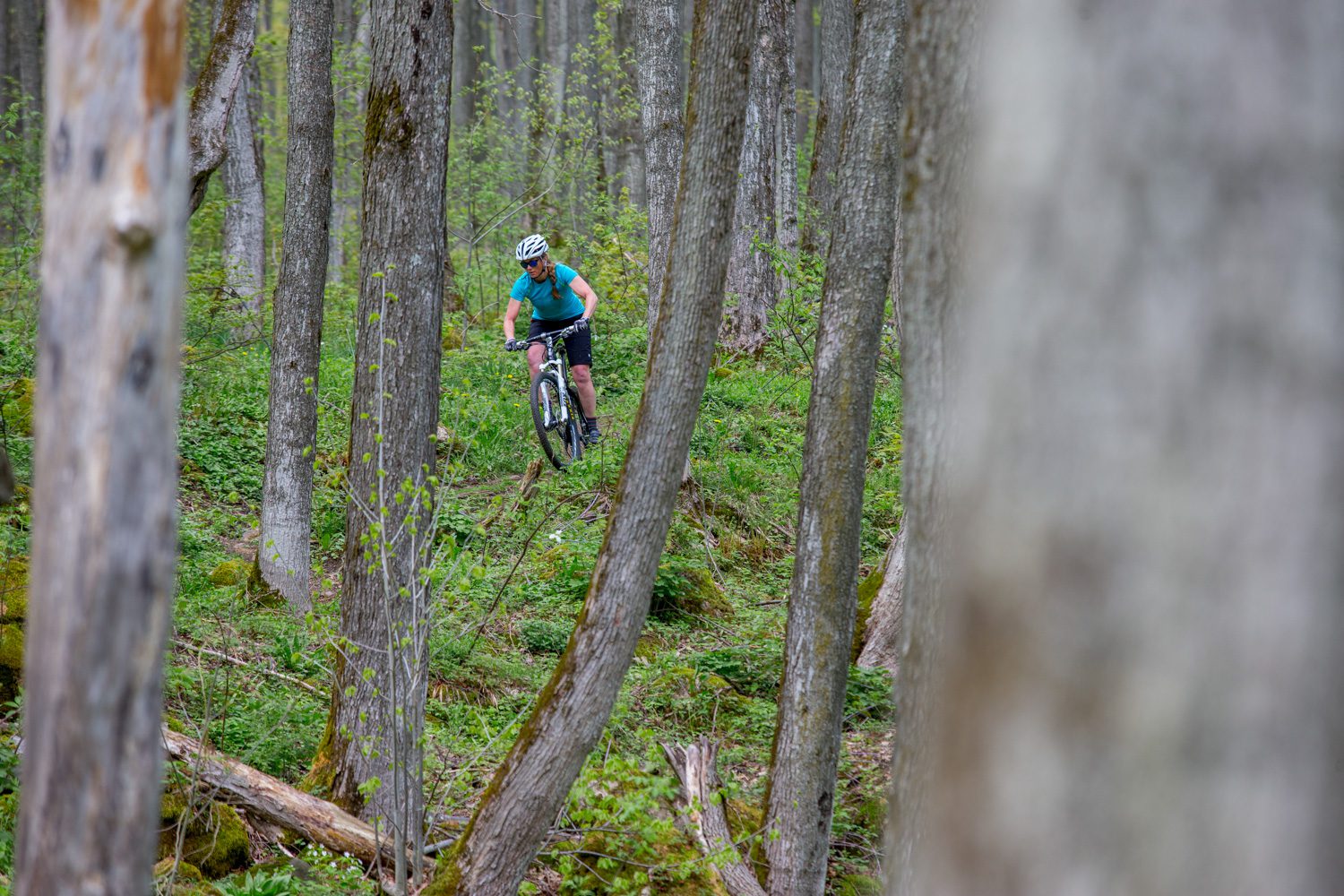
The singletrack era
Purpose-built singletrack building didn’t take hold until the mid-1990s, when riders began carving through the forest rather than relying on hiking paths and double…
Click Here to Read the Full Original Article at Canadian Cycling Magazine…