

Let’s face it, when dragging yourself to the turbo after a long days work on a weeknight, the last thing many of us want is a puzzle. Time on the indoor trainer is often a chance for us to unwind, get a good suffer session in, or just focus on fitness ahead of the weekend. ERG mode is designed for exactly that.
Setup a session, start pedalling, and the trainer does the thinking in the background. Used well, it’s a brilliant assistant that frees up headspace and keeps training honest. Used blindly though, it can turn good intentions into a slog.
What is ERG mode?
First and foremost – what actually is ERG mode? For those who aren’t in the know, ERG mode is essentially a function which keeps resistance to a determined power, regardless of cadence or gear choice. Whatever gear you choose, or however fast you spin your legs, the wattage will remain the same.
It’s how interval workouts in Zwift and other platforms work relatively seamlessly, allowing you to stick in a single gear and let the trainer work out the rest.
ERG watches how fast you’re turning the pedals and nudges resistance up or down to hold a pre-set wattage. Spin faster and the trainer eases the load, slow down and it adds resistance. This only works when the software knows the target, which is why ERG mode tends to be associated with structured workouts rather than free-riding around a virtual map.
All sounds simple, right?
Why gearing still matters
The first common misconception around ERG mode seems rather counterintuitive – gearing still matters, or at least sort of.
While you absolutely can complete ERG mode training sessions in any gear and still technically ride at your specified wattage, your gear choice will still affect your indoor ride feel.
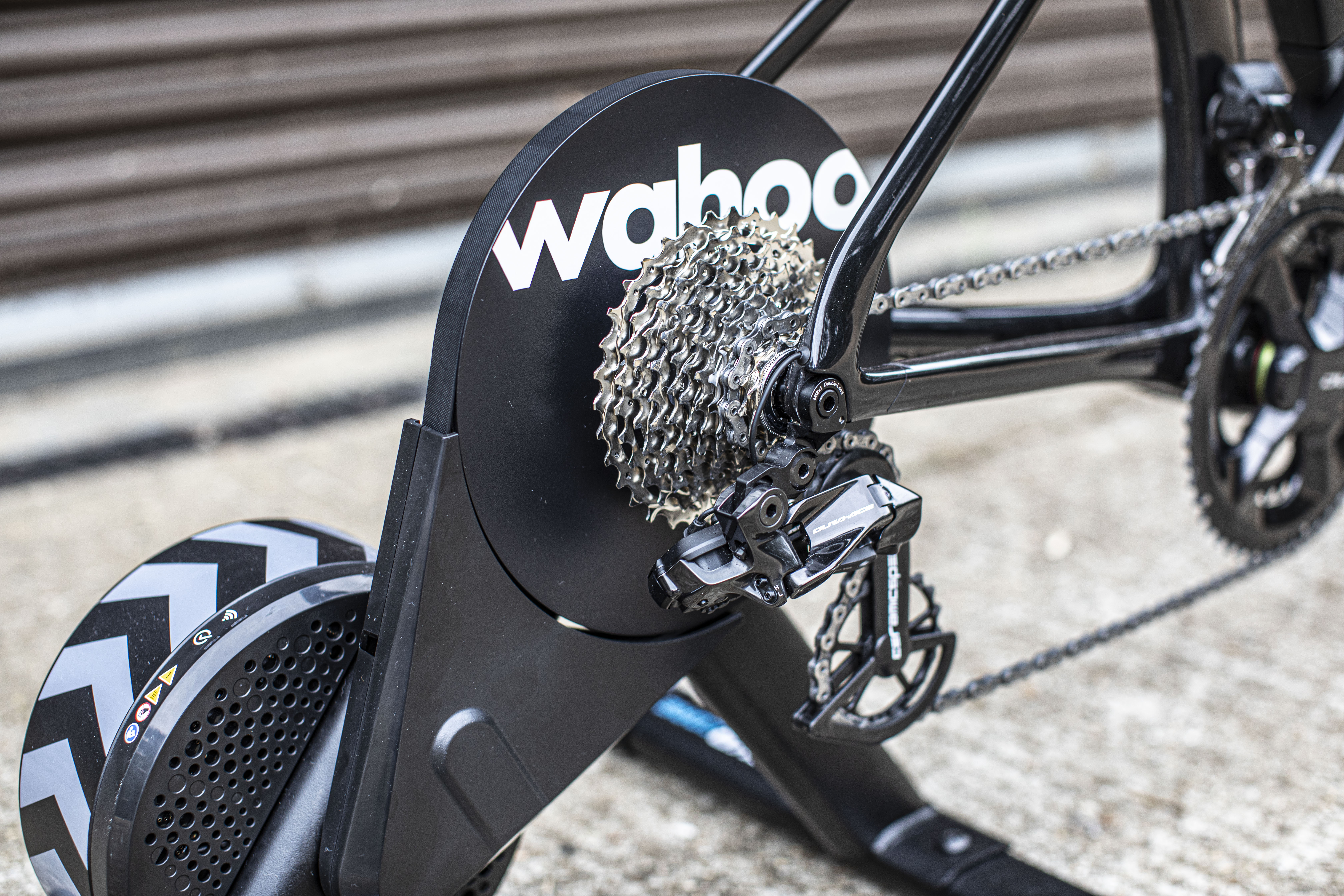
Riding in your big-ring with a harder-gear setup drives the flywheel faster, which smooths the pedal stroke and makes the effort feel more ‘road-like.’ For most efforts, this makes it easier to keep momentum and sit on a steady cadence, even if it can be a touch louder. In contrast, the small ring lowers flywheel speed and gives a grippier, more deliberate feel at the pedals. That can be useful for controlled torque work, but can leave you feeling like you are…
Click Here to Read the Full Original Article at CyclingNews RSS Feed…