
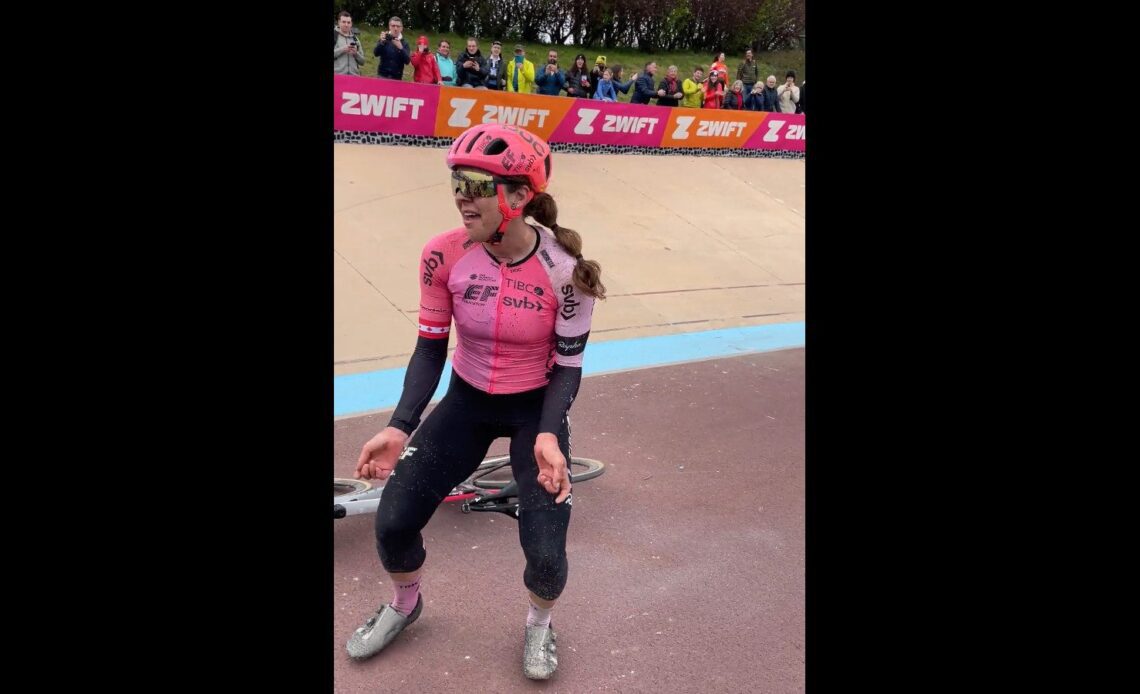
On Monday, changes were announced in 2026 for the toughest one-day race in the world. Next year will see both the men’s and women’s Paris-Roubaix races on the same day: Sunday, April 12. According to race organizers, the ASO, there are several reasons for the change. But are they good or bad for women’s cycling?
Thierry Gouvenou, race director, explained the new format to DirectVelo. “Bringing everything together on the same day makes it easier to organize security. Setting up the course once for both races is far less demanding for law enforcement. There are also budgetary considerations,” the former pro said.
Previously, the women’s race had taken place on Saturday, which, according to the former French pro, “complicated arrangements across the Lille metropolitan area.”
Blocking roads for two consecutive days created challenges for local communities. Gouvenou acknowledged that combining the events will make the logistics more complex:
“It will require more vehicles and additional staff,” he said.
“On Saturday, it [the women’s race] already had decent attention, but now people will watch the men’s race first and then follow the women’s event,” Gouvenou said. He says the later start should boost the women’s race by keeping fans in place after the men finish — and maybe winning over spectators who wouldn’t normally tune in. It follows the model used at several other WorldTour events.
However, this sentiment is not shared by Alison Jackson, the 2023 winner from Vermilion, Alta.
She has already mentioned how Canadians — notably women — winning the big races has changed things for all the riders in the peloton, whether present or future. She pointed to her longtime teammate and friend Magdalène Vallières Mill taking a historic rainbow jersey as being such a milestone in the sport.
“I am so proud of her. I could not be more proud. Megs is a gem of a person. I have always been a teammate, teammate, teammate, but when she came she said I am going all in for this world champs, with preparation, altitude, the training just so focused,” she said to Velo.
Jackson said that, “I know when I won Roubaix, I remember seeing the Canadian riders afterwards. Canadians never win these big races. I was seeing that in their eyes something changed, like ‘I can do it too.’”
Which comes back to the question of exposure for female pros — whether Canadian, Belgian or…
Click Here to Read the Full Original Article at Canadian Cycling Magazine…