

Though neither the steepest nor the longest climb in any Tour de France, the Alpe d’Huez is, by some distance, the most famous of the many mountains that have featured in the race over the years.
If the route rumours are to be believed, Alpe d’Huez will return to the Tour de France route in 2026, with the likes of Tadej Pogačar and Jonas Vingegaard set to battle it out on the climb and add another chapter to it’s legendary history.
This would mark the 33rd time the climb has featured in the race, after last being in the men’s race in 2022, whilst it provided the showpiece finale to the Tour de France Femmes in 2024.
Here, Cyclingnews look back at the storied history of the Alpine climb, and how it has determined the outcome of the race through the years.
Our list of ascents is far from exhaustive, but captures some of the mountain’s most momentous years as a protagonist in the race.
1952
L’Alpe d’Huez changed the face of the Tour de France when it became the first ever mountain-top finish. At the end of a 266-kilometre stage 10 beginning in Lausanne, the unpaved ascent proved to be the launching pad where Fausto Coppi would return from two rather lacklustre years to take his final Tour victory.
Coppi stormed up the mountain in 45 minutes and 22 seconds – a record which would hold until 1989 – took the yellow jersey from Italian Andrea Carrea and never relinquished the lead.
Surprisingly, 23 years went by before the Tour de France would return to the mountain, and the epic battle that ensued would make the Alpe a fixture of the race.
1976
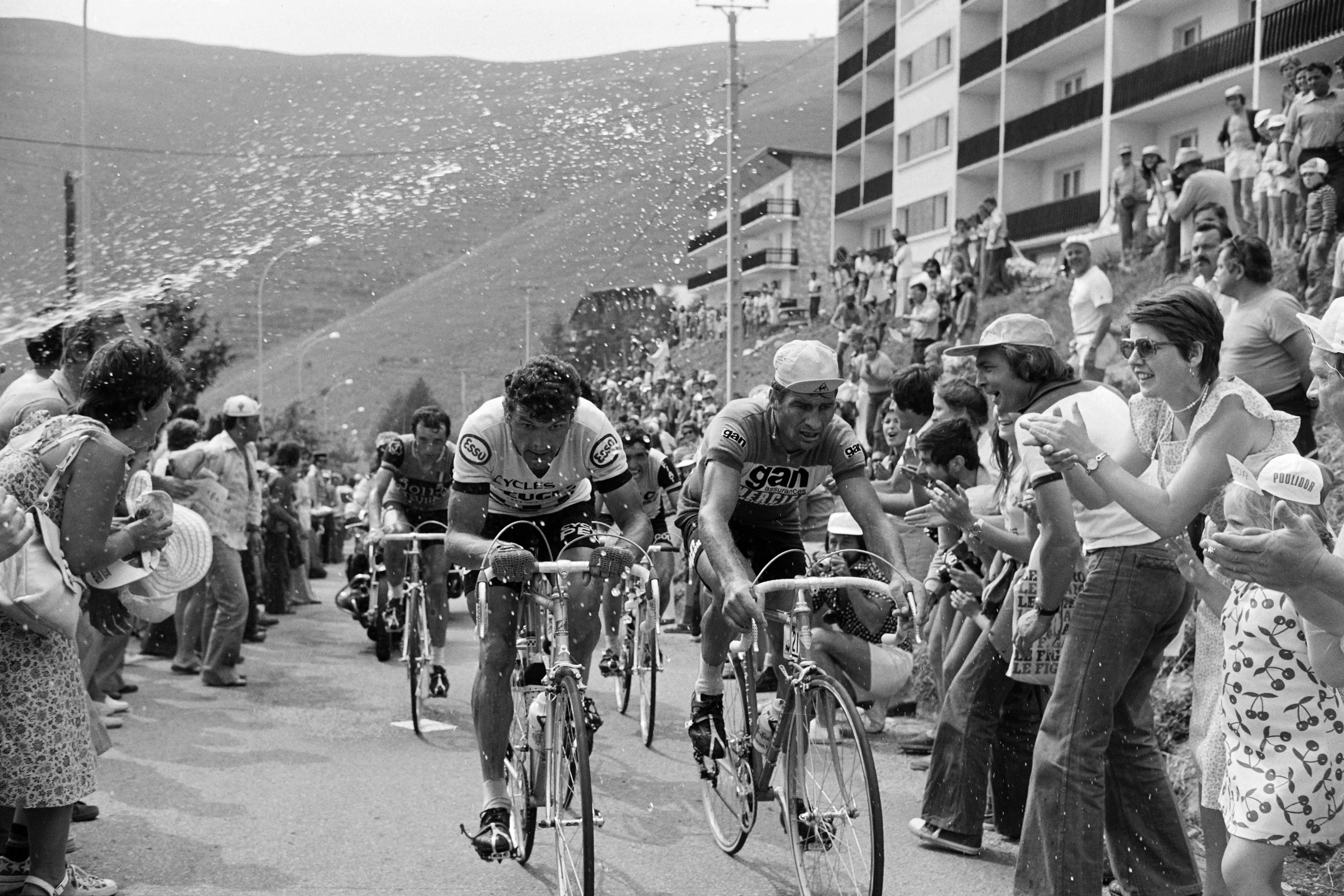
On the Tour’s second visit to Alpe d’Huez, the 258-kilometre stage 9 beginning in Divonne-les-Bains, Joop Zoetemelk and Lucien Van Impe treated the fans along the slopes to an duel all the way up the mountain. Yellow jersey Freddy Maertens was left behind as the top GC challengers including Raymond Poulidor, Francisco Galdos, Raymond Delisle, Van Impe, and Zoetemelk battled on the lower slopes of the Alpe.
Click Here to Read the Full Original Article at CyclingNews RSS Feed…