
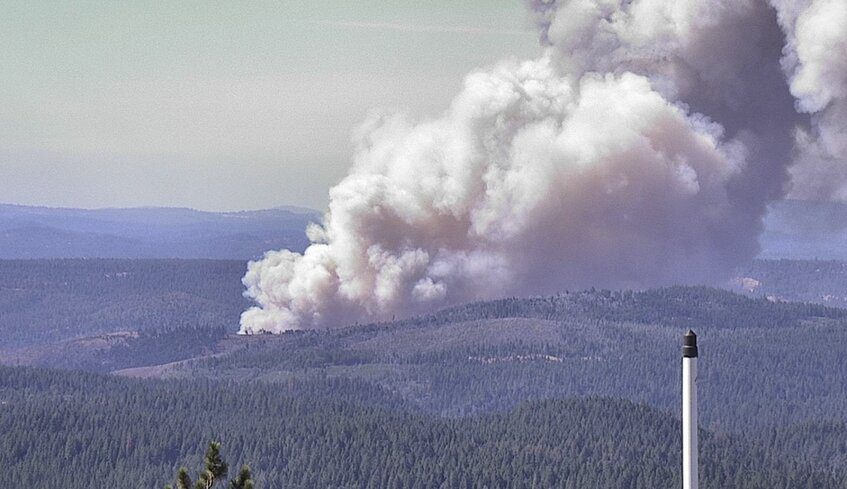
There are more than 150 wildfires currently burning in Quebec, prompting air quality warnings in that province, as well as in Ontario and large swaths of the northeastern United States. Western Canada, where crews have been struggling with a spate of wildfires over the last several weeks, continues to be affected by close to 150 fires that remain active across Alberta and British Columbia.
Canada’s Air Quality Health Index (AQHI) provides offers snapshot of current and forecasted air quality with a simple numerical scale: a reading of zero to three means a low health risk, four to six indicates a medium risk, seven to 10 presents a high risk and any number above 10 indicates very high risk. On Wednesday, several regions in Ontario and Quebec were in the medium- and high-risk zones, with Ottawa recording very high risk levels. The Sport Information Resource Centre, which has partnered with Health Canada to offer guidance on what action athletes, coaches and athletic event organizers should consider taking in response to AQHI readings, recommends that outdoor exercise and events be cancelled, rescheduled or moved indoors when an AQHI readings climb above six.
Dr. Michael Koehle, a respiratory physiologist and medical doctor at U.B.C. gave some guidelines as to what to do when the air is smoky.
“Athletes are advised that, in many areas, it’s OK to continue outdoor workouts as long as they do not experience smoke-related symptoms like coughing or throat irritation. If they do have symptoms, they should restrict outdoor activities to low-intensity activities,” Koehle said.
Risks of smoke inhalation
It should be noted that the side-effects of smoke in the lungs can be quite severe.
“Inhaling large volumes of wildfire smoke can inflame lungs,” Jennifer Stowell, a postdoctoral associate at Boston University’s School of Public Health said in the New York Times. She says that some research has said that wildfire smoke “may be more toxic” to the lungs than standard urban air pollution. “It contains a distinct mix of particulates that activate inflammatory cells ‘deep in the lungs’ while hindering other cells that can dampen the inflammatory response later,” Stowell adds.
Some medications could be problematic
The guidelines go on to suggest that athletes experiencing shortness of breath should consult their medical professional. They warn that some asthma medications (i.e. bronchodilators) may actually exacerbate symptoms by allowing…
Click Here to Read the Full Original Article at Canadian Cycling Magazine…