
Safety is a topic that’s never far from the minds of all cyclists. More so than any other sport, cyclists interact with the real world when we carry out our activity. We encounter wet roads, potholes, roundabouts and traffic islands to name a few factors in the spaces we do our sport. And that’s all before you add in 100 odd riders jostling around you in a race. Crashes are inevitable and they are becoming more common, an issue which the former Hour world record holder, Dan Bigham is frank about.
“I have a two-year-old, and I would actively discourage them from getting into competitive cycling. I don’t feel it’s a safe sport to get them into, and probably a lot of parents feel the same,” said the Head of Engineering at Red Bull-Bora-Hansgrohe, on stage at Rouleur Live.
“We’ve had deaths in the sport, and inexcusable deaths, like Muriel Furrer at the World Champs just a couple of years ago. Not having a medical response for well over an hour is just simply unacceptable, and that shouldn’t be par for the course.
“But will it take a superstar of our sport to have a life changing or life ending injury before we take it seriously? I genuinely hope not, but unfortunately, that might be the case before we actually act in a way that is meaningful and will create the change needed for the sport,” said Bigham.
‘Trust in science’ — the need for an expanded database
Bigham, forever a numbers person, called for a more detailed database of all the facts behind a crash because without one it isn’t always clear what’s causing the accident.
“I think the big piece that we’re missing at the moment is the understanding of what is the root cause of an increase in crashes. We can accept that increase has happened, the data supports it, people are crashing more, but why? And before we say ‘we need to do this’ or ‘we need to do that’, the first thing is understanding what’s causing crashes.
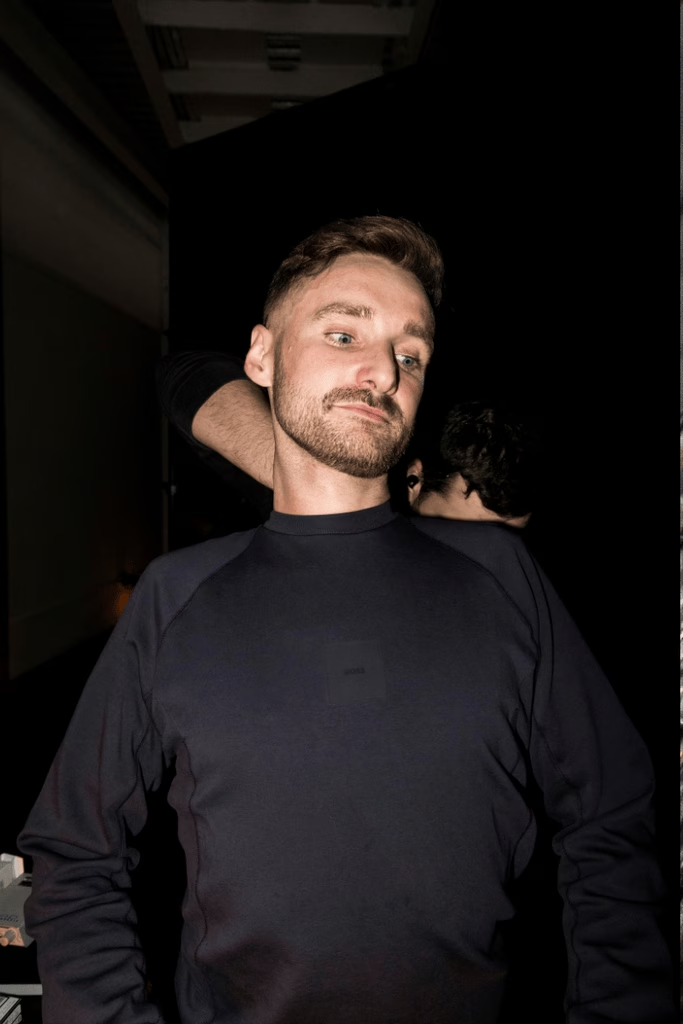
Bigham at Rouleur Live 2025 (Image: Sean Hardy)
“When you know why something happens, you can then discuss and propose solutions and have a genuine, proper discussion on how we can improve it,” said Bigham.
The cause could be tracked fairly easily with the tools we already have available — TV cameras, GPS tracking, maps, and the devices on the riders’ head units.
Read more: ‘Only 10% of pros know how to race properly’ – Adam Blythe on the evolution of cycling tactics
“We see a crash in a picture or maybe a…