

From a humble but specific neck brace, Leatt has expanded broadly into the world of mountain biking. Cross country and general riding gear now sit alongside the South African brand’s established gravity protection bits that established the brand. That includes a growing and rapidly refining line of footwear.
We’ve had our feet in three of the standout shoes from Leatt’s 2026 footwear line for the past few months. After some very wet riding, and a brief reprieve of unseasonably dry riding, we have some initial thoughts. The models we’re testing are the Hydradri ProClip 8.0, built for surviving the worst weather, ProClip 6.0 Trail Boa, a more general high-end trail/enduro shoe, and the very casual RideOn’s 2.0.
Review: Leatt HydraDri ProClip 8.0
We’ll start with the wet weather bootie. That is the shoe that’s been most appropriate on the most rides since this trio arrive mid-November. The ProClip 8.0 is new for 2026, offering a significant upgrade in materials and construction from the previous year’s HydraDri 7.0. The 8.0 moves to 20,000mm/20,000g/m² waterproof/breathability rating materials, up from 10,000 rating for each on the last generation.
On the trail, that fabric upgrade is significant and appreciated. There’s been a few heinous days in the woods this winter (bike testing never stops here at CanadianMTB!) that were just so much more comfortable because of the HydraDri Evo membrane on these shoes. Cold hands and cold feet are two of the easiest ways to ruin a ride. These shoes go long ways to solving at least one half of that equation. Pulling a dry (if steamy) sock out of these shoes at the end of the ride was a revelation after years of not believing the winter-shoe hype.
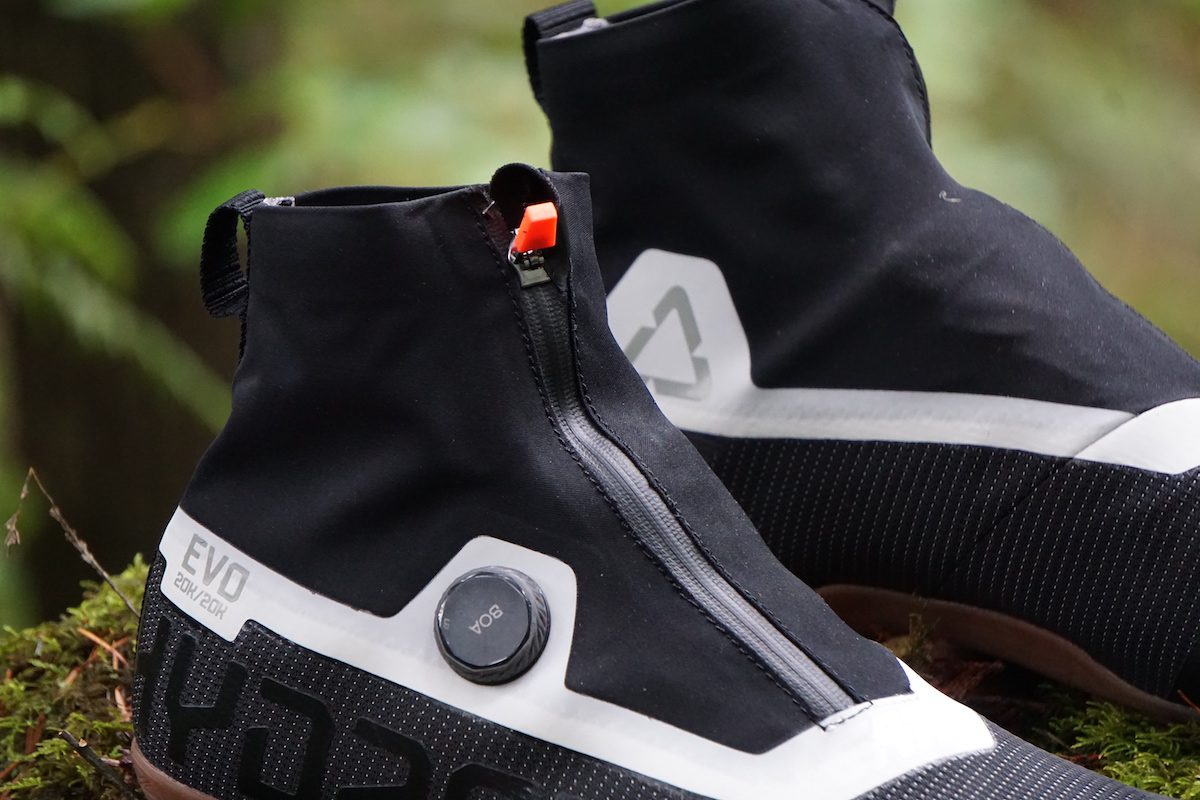
HydraDri vs the elements
The HydraDri were really good, but not perfect at keeping my feet dry. Heavy rain, sloshing through deep puddles and pedaling through semi-submerged sections of trenched out access road were all mostly fine. A ring of grippy material around the inside top section of the gaiter to helps keep the ankle seal against the elements quite effectively. Only one or two soakers managed to seep down into my feet, and that’s over many wet rides.
It would be nicer if the gaiter was taller, though, as it left a gap between my pant leg and the top of the shoe. If that weren’t there, these would be unstoppable. The zipper also never seems to quitemake it up the last millimeters to fully closed. This adds slightly to the exposure and made…
Click Here to Read the Full Original Article at Canadian Cycling Magazine…