
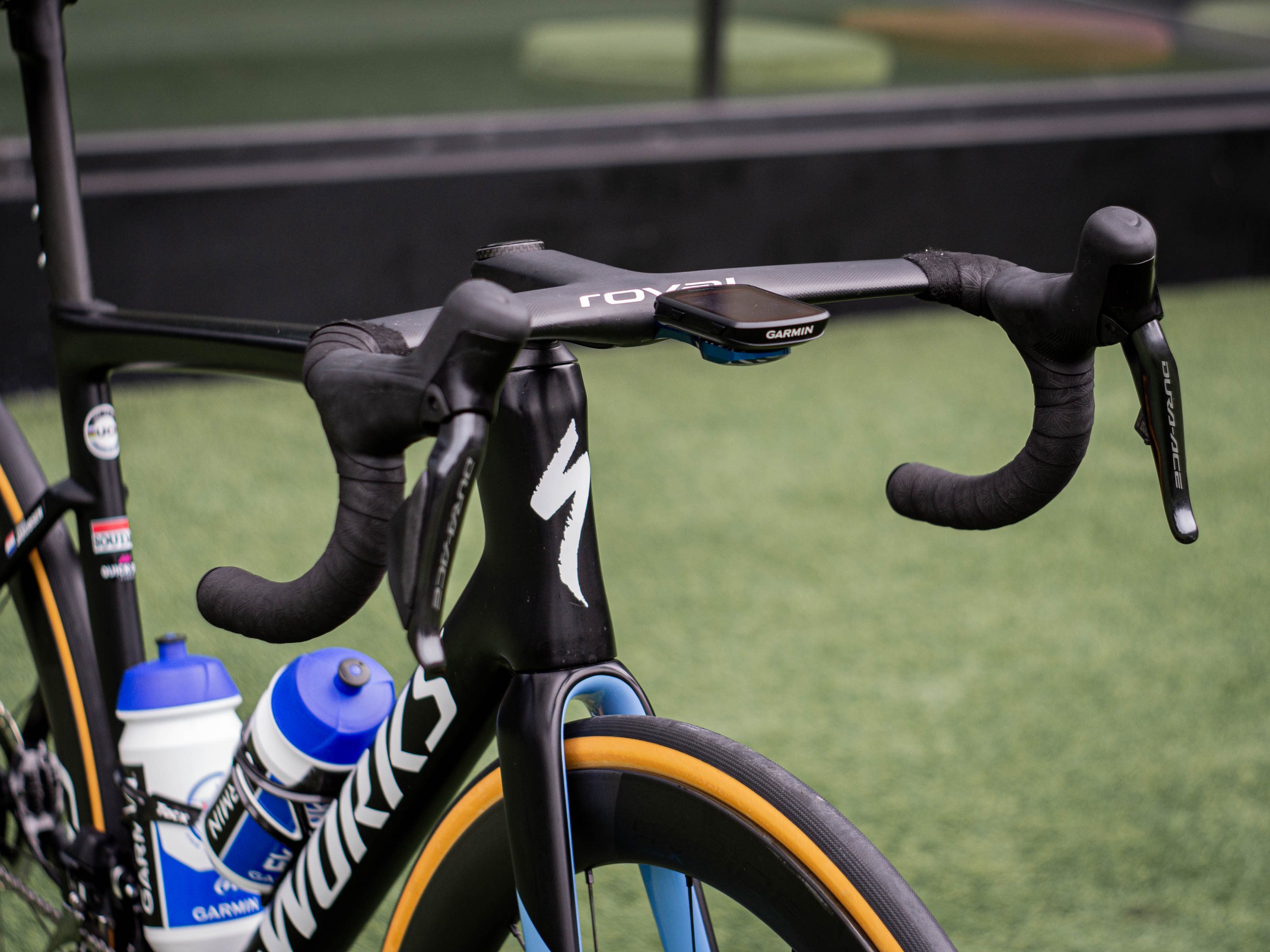
Following the decision by the UCI to ban turned-in brake levers in 2024, the president of the CPA rider’s association Adam Hansen, has told Cyclingnews he is in favour of the new rule and explained why it is important for rider safety.
Speaking exclusively to Cyclingnews, the former Australian revealed that in his role at the CPA, an organisation whose primary aim is to protect the rights and interests of riders, he worked with the UCI’s Head of Road Cycling and Innovation, Michael Rogers, to come to the decision.
“I surveyed the riders, I wanted to know their feedback because some riders were concerned and some riders in the peloton saw crashes. Some riders were going pretty extreme with it.” Hansen said of the turned-in levers, his survey done during the summer at major races with a significant number of riders.
Alongside rider concerns, Rogers’ work with handlebar and carbon fibre cockpit manufacturers. They provided the greatest case in favour of the ban because turning in levers can change the point of contact of the levers and apparently put extra stress on the bars, which can cause them to fail.
“He actually got some research from the manufacturers,” Hansen said of Rogers. “At 10 degrees and at 15 degrees inwards, it caused extra stress on the handlebars. He witnessed some handlebars cracked and we saw the images of these handlebars with cracks in them.
“There’s a lot of extra stress when they’re not put in the correct position designed by the manufacturer. Manufacturers design the levers in a sense where they’re meant to sit straight on the handlebars. It was never the manufacturers’ idea that they’d be put at an incline.”
The risk of handlebar damage and subsequent crashes could lead to a fatality, and as a result Hansen is strongly in favour of the new UCI rule.
“What they’re actually trying to do is making sure that riders and mechanics are not putting the brake levers past the stress point recommendations. It’s done from a safety point of view. It’s not just another stupid UCI rule. This is a valid rule.
“What worries me is a rider in the middle of a race, let’s say he sprints uphill and he’s on his brake levers [hoods]. He’s sprinting uphill, and that causes a crack but you don’t really feel it because it could happen at the bottom of the connection. And then at the end of the race, he’s sprinting on the [drops], sprinting underneath the crack. You can have a fatal accident. And not just you but you could take down other riders.”
Click Here to Read the Full Original Article at CyclingNews RSS Feed…