
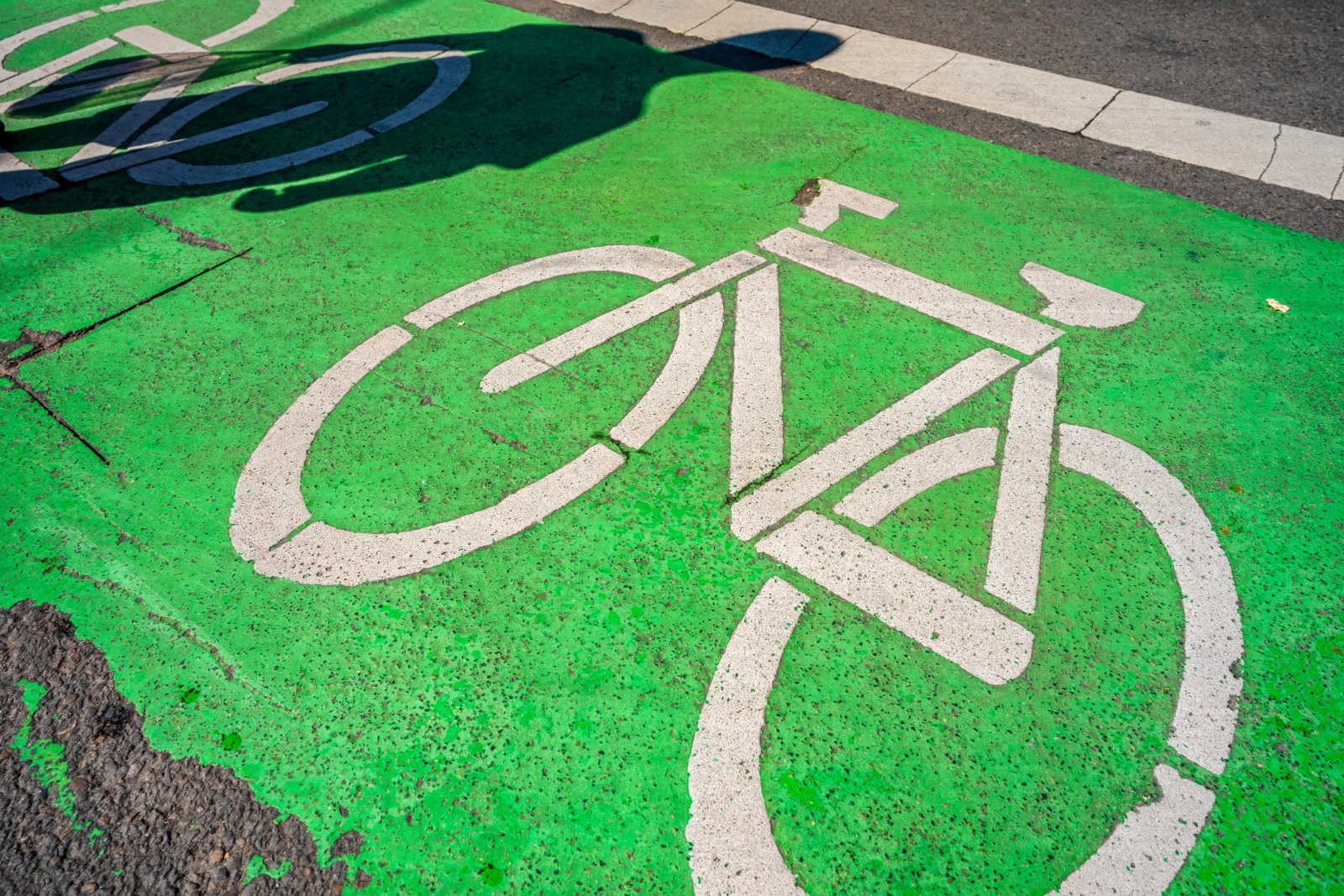
Would you look at that? A recent study from Ireland has provided evidence that protected bike lanes do not slow down emergency vehicles. This is a claim often cited by opponents of cycling infrastructure.
Commissioned by Limerick City and County Council, the report, Integration of Active Travel Programme with Emergency Services, examined the city’s protected bike lane network in detail. Researchers conducted field assessments, traffic-flow analyses, and design reviews. They also had interviews with local emergency services including police, fire, ambulance, and marine rescue teams.
The study concluded that most protected bike lane schemes in Limerick either maintained or improved access for emergency vehicles. Designs that followed Ireland’s national street design and cycling guidelines provided adequate road widths and intersection layouts. This in turn ensured emergency responders could navigate safely and efficiently.
In essence, this means that modern protected lanes can actually facilitate the movement of emergency vehicles rather than obstruct them. The data will be used by the government for future cycling projects.
While Limerick’s study is one of the first of its kind in Ireland, similar results have been observed here. In Toronto, reviews of major corridors have shown that bike lanes do not delay emergency services. Fire and ambulance departments in those areas report that response times remain consistent.
In the last year, Premier Doug Ford has used this as a talking point in the ongoing bike lane debacle in Ontario. He has on several occasions suggested the bike network was hindering emergency services from navigating downtown quickly. It was debunked by several cycling advocates in Toronto. “It’s an absolute disaster. It’s a nightmare,” Ford said.
Other studies have similar findings. Just a few years ago, Paris firefighters achieved record-breaking response times. Despite a six-second increase in average intervention time reported by the Paris fire brigade, response times significantly improved since 2015. And the reason was bike lanes, according to Le Parisien.
“When we build 2.5-metre bicycle lanes, it facilitates vehicle movement. These figures confirm that cycle lanes can create free-flowing routes for firefighters, ambulances, and police,” David Belliard, Paris’s deputy mayor for public spaces and transport, said. “Our improvements aim to enhance emergency traffic flow.”
Studies like these are important to…
Click Here to Read the Full Original Article at Canadian Cycling Magazine…