
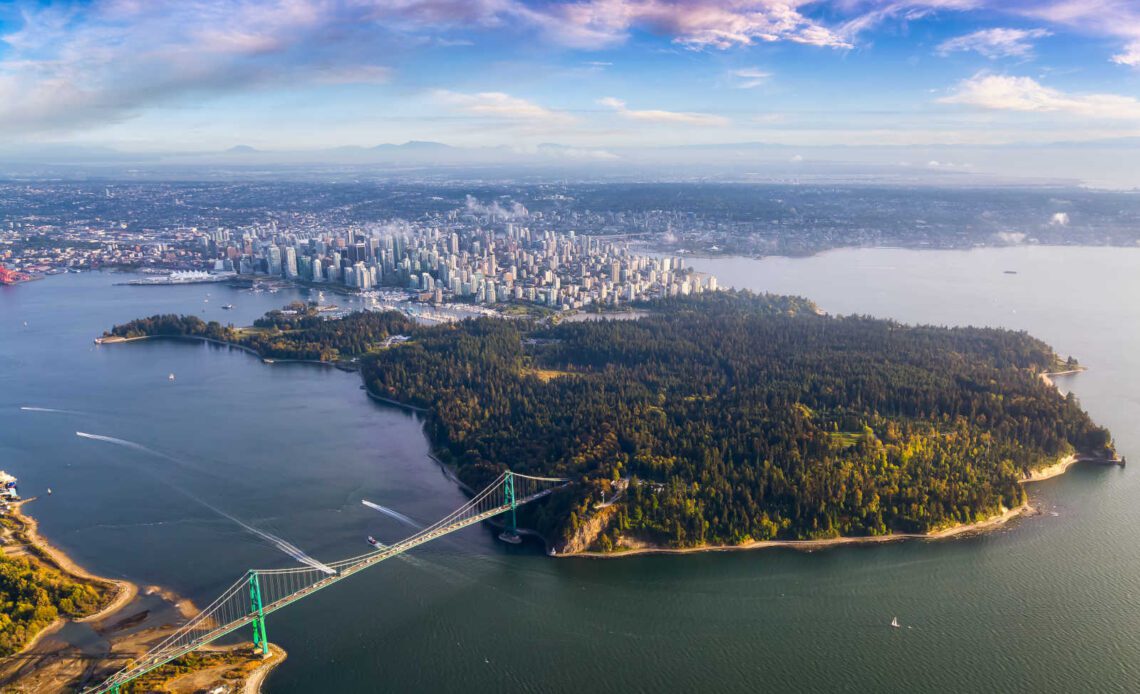
Vancouver’s park board will vote soon on a sweeping mobility study for Stanley Park that could reshape how visitors move through the city’s landmark green space.
The Stanley Park Mobility Study, launched in 2022 and published this summer, outlines options to reduce car traffic and improve transit access. Its central recommendation is a new bus route looping around Stanley Park Drive, which could be operating by 2027 if commissioners approve the plan.
“For years, people have been asking, ‘How do I get from Waterfront Station to the totem poles, or even up to Prospect Point?’” park board commissioner Tom Digby told the CBC. “You can’t get there unless you have a private vehicle or your own bicycle these days. So TransLink has offered to put bus service around that.”
Car-free days, bus lanes and bike lanes
The study also floats long-term ideas like car-free days, bus lanes and separated bike lanes. That included resurrecting the controversial lane removed from Stanley Park Drive in 2023. That lane, created during the COVID-19 pandemic, was credited by cycling groups with boosting park use but was removed after complaints it limited access for people who rely on vehicles.
Secret meetings, political deals: How Stanley Park’s bike lane was axed
Jeff Leigh of HUB Cycling, which took part in consultations, said the report’s timeline is too slow.
“The temporary bike lane … didn’t just increase cycling, it increased the use of the park,” he said to the CBC, arguing a protected lane should be restored immediately.
Digby, a Green Party commissioner, said he will propose an amendment to add a separated bike lane on Prospect Hill. “It should not impact any businesses and it should not lead to any traffic backups outside of the park,” he said.
Other major urban parks like New York’s Central Park have already gone largely car-free, Digby noted. “It’s not going to be a sustainable option going forward into the next 50 to 100 years.”
Click Here to Read the Full Original Article at Canadian Cycling Magazine…